

This site is no longer active!
If you are the owner, you must reactive this site for it to be published again
or contact us at support@rebolthq.com

If you are the owner, you must reactive this site for it to be published again
Thinking about a new hot tub? Learn the key code clearances, wiring rules, and panel considerations every homeowner should know before scheduling a 240V hookup.
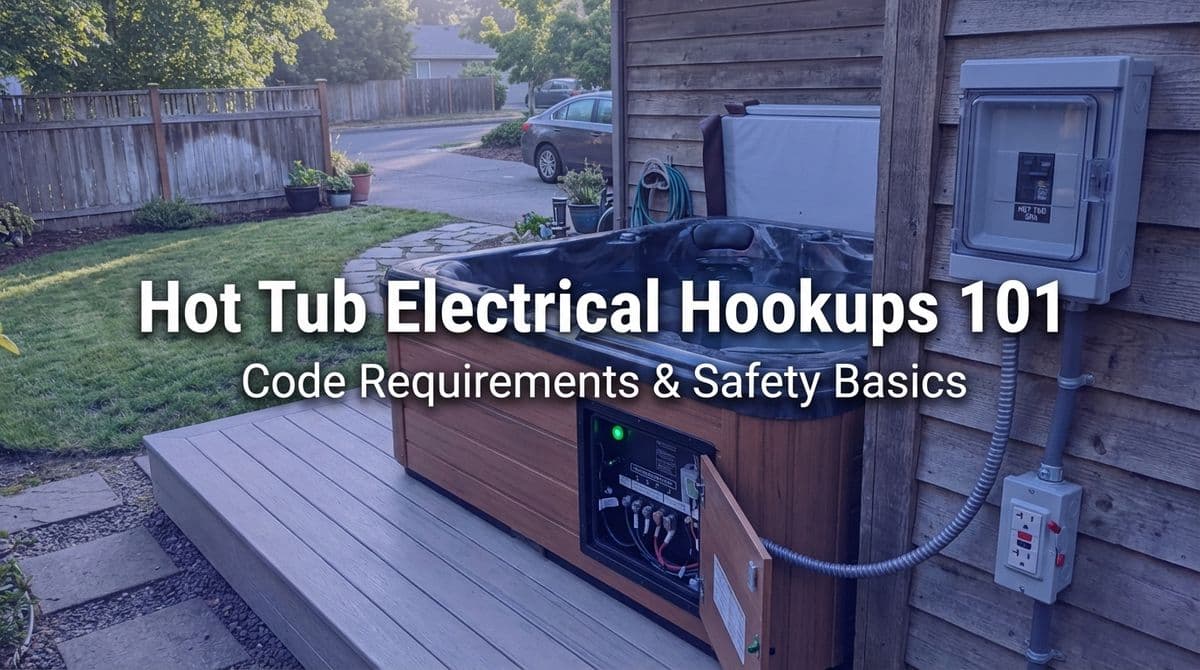
We’re licensed residential electricians who handle hot tub hookups all the time, and we like to walk homeowners through the same code, safety, and planning steps we use on every job so there are no surprises on installation day.
We recently got a call from a homeowner — let’s call him Corey — who was getting ready to install a new hot tub in his backyard. He had already measured the run for the electrical line and figured it would be about 150 feet through his attic from the panel in the garage to the far corner of the house where the tub would sit. He asked what our hourly rate was for a 240-volt hot tub hookup.
We told him what we tell most hot tub customers: we don’t price these jobs by the hour, because the details matter. Attic access, wire length, panel capacity, and code-required clearances around the tub can make one job easy and the next one a “freaking nightmare,” as we joked on the call. Instead, we give a clear quote after we see photos or do a site visit.
Most new spas and hot tubs are 240-volt, 50-amp systems that must be hardwired — just like an air conditioner — not plugged into a standard outlet. When Corey asked if his “50 amp, whatever” would work, we walked him through the basics we cover with every homeowner:
This is why we asked Corey to text us photos of his electrical panel, attic access, and backyard. Sometimes the path is straightforward; sometimes there are tight rooflines or no crawl space, and the job becomes much more involved.
Corey had done some homework and asked about how far the tub had to be from the house and from the electrical connection — he guessed “five feet away from the connection or something like that.” That gave us a perfect chance to explain the clearances we look for on every project.
Most 240V hot tubs require a local disconnect box (often called a spa panel) that lets you shut off power near the tub. By code, we typically need to place that box:
This keeps you from being able to reach the disconnect while you’re in the water, but still allows safe, quick shutoff.
Corey wanted to confirm something important: “So you’re saying the hot tub can’t be within six feet of another receptacle?” Yes — that’s correct for standard outlets.
When Corey asked, “You mean like a 110 receptacle?” we confirmed: yes, any common household outlet within that radius has to be addressed to keep the installation safe and code-compliant.
Another thing we asked Corey about was nearby metal: handrails, posts, fences, or any other metal surfaces close to where the tub would sit.
Part of our pre-quote process is having you send backyard photos from a few angles so we can spot these potential bonding issues early.
Many homeowners don’t realize that a 240V hot tub hookup is usually a permitted electrical project. In most cities and counties, adding a new 50A spa circuit requires an electrical permit and a final inspection.
When we handle the work, we typically:
This process protects you: it documents that the work was installed safely, helps with future resale, and keeps you from potential issues with your insurance if something ever goes wrong.
Corey’s panel had “open availability,” which is great news. But a lot of homeowners call us from older houses where the panel is maxed out or undersized.
Before we ever quote a hot tub hookup, we look at:
Not every hot tub job needs a panel upgrade, but it’s better to know that upfront than to discover it after the spa is delivered.
With Corey, we asked him to text:
From there, we can usually provide a solid estimate and let you know if the run looks “easy” or if we’re dealing with tight rooflines, long distances, or tricky obstacles that could add labor time.
Before you schedule your hook-up, here’s a simple checklist you can run through with your electrician:
Corey was doing things the right way — asking questions, measuring the run, and checking clearances before the spa even arrived. That’s exactly what we recommend. Planning the electrical side early gives us time to identify any panel issues, tricky attic routes, or clearance problems before you’re staring at a delivered hot tub with no power.
If you’re considering a new hot tub, start by confirming the electrical requirements, snapping a few photos of your panel and backyard, and having a licensed electrician review your setup. With a little planning and a code-compliant installation, you’ll be soaking safely — and worry-free — for years to come.